
Finland is becoming more international – but is Finland ready?
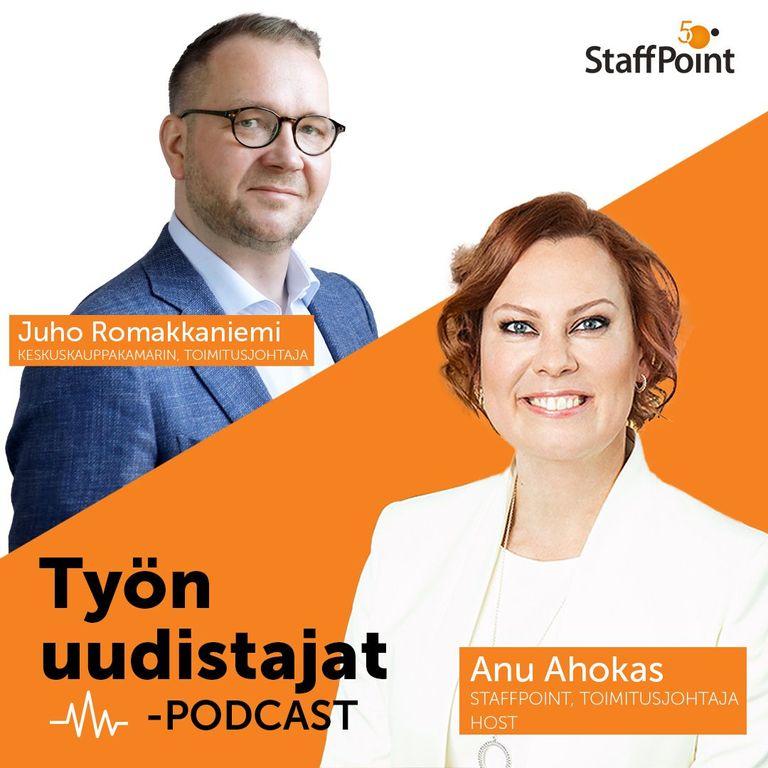
Työn uudistajat -podcast dives into Finnish working life and its renewal, without ceremonial speeches or political jargon! In the second episode, StaffPoint’s CEO Anu Ahokas discusses whether Finland is truly ready for internationalization with Juho Romakkaniemi, CEO of the Central Chamber of Commerce. Romakkaniemi is an experienced political figure both in Finland and Europe, having served as an aide and chief of staff to two Finnish prime ministers. He is known not only as an active voice in societal debates but also as a passionate supporter of his hometown football club, KuPS from Kuopio
Finding skilled labor is a major challenge
Finland faces a demographic challenge — the population is aging, and birth rates remain low. Finding skilled labor is already a major issue, and the situation is expected to worsen in the coming decades. According to Romakkaniemi, this is a critical question for Finland’s future. The Central Chamber of Commerce has therefore placed strong emphasis on international recruitment, but as he points out, there is no silver bullet. He highlights three priorities:
- Harness domestic talent, prevent young people from dropping out of education and work.
- Make labor markets more inclusive, ensure that as many working-age people as possible are active in the workforce and contributing to society.
- Attract foreign professionals, Finland must continuously and actively bring in skilled workers from abroad.
Romakkaniemi explains that Finland should appear more attractive within the EU’s internal market, where labor mobility is free. There is still room for improvement — particularly in how we attract professionals from outside the EU. One positive step has been the “fast track” process for specialists, where the Finnish Immigration Service promises to process residence permits within two weeks.
“We’ve had to create these exceptions because our system’s foundation is flawed. We need a comprehensive reform of skills-based immigration processes,” Romakkaniemi says.
Despite the need for more people to study, work, and build Finland’s future, bureaucracy often prevents newcomers from entering the country in sufficient numbers.
“It’s a senseless waste of resources,” Romakkaniemi concludes.
Does Finland’s attitude support immigration?
According to Romakkaniemi, Finland needs a national action plan to make itself more appealing. The competition for global talent is fierce, and Finland starts with disadvantages such as a difficult language and cold climate.
“All our studies show that the labor shortage also affects service and manual professions. Skills shouldn’t refer only to elite expertise, we also need motivated, everyday professionals,” he emphasizes.
He notes that Finland’s general attitude toward immigration doesn’t differ much from other Northern European countries. Still, some Finnish companies are hesitant to hire international employees due to perceived day-to-day challenges, such as switching the workplace language from Finnish to English.
“At the Central Chamber of Commerce, we don’t believe the government or bureaucracy is solely to blame, although there’s work to do there too. Attitudes within companies matter, as well as understanding what it truly means when someone from another culture joins the team,” Romakkaniemi explains.
Studies by the Chamber show that many companies struggling with labor shortages have never tried international recruitment, something that needs to change.
“The encouraging thing is that once a company makes its first international hire, it usually wants to do it again,” Romakkaniemi sums up.Opens in a new tab
You have not approved cookies yet, please provide consent and try again